
Get Your Milk Flowing
If you are struggling with a slow letdown, or a baby who becomes frustrated at the breast before milk starts flowing, you are not alone. This is one of the most common challenges I see in the hospital with impatient newborns who are still learning how feeding works.
When it comes to pumping, most parents are sent home using a standard 24 mm flange that comes in their kit, even though this size fits very few people. Flange fit has one of the biggest impacts on milk supply for pumping moms, and it can absolutely influence how quickly your milk lets down. Using the correct flange size can significantly improve milk flow and support a more effective pumping session.

Expected milk volumes
Let's clear something up. I need you to know that it is normal to not make more than a couple drops in the first few days postpartum. It can take approximately 3 to 4 days for your milk to “come in.” Before then, your body produces colostrum, which is small in volume but extremely concentrated in calories and immune support. In other words, even if you are only seeing drops at a time, your baby is still getting exactly what they need. Unfortunately, if you have a baby who has been bottling, say they you have been in the NICU, they get used to the fast flow that is the bottle and then when they come to the breast, they don't understand why they have to work for it and they grow extremely frustrated. They want milk and they want it now.
However this doesn't mean that there's anything wrong with your supply. This is about supporting your baby while they learn that they need to work for it to get your milk flowing.
So how can we support them while they're learning? Well, we can employ some strategies to help get your milk flowing and generate a letdown before your baby goes to the breast so that when they go to the breast, they get an immediate reward for their efforts, just like when they go to a bottle. The hope being, that the more often the baby goes to the breast and is able to stay long enough to get your milk flowing on their own, the quicker they learn that they just need to work for it for few seconds (or 60) before your milk starts flowing freely.

But what exactly is a letdown?
A letdown, also called the milk ejection reflex, is the process of milk flooding out of the breasts. This is like a dam, opening the flood gates. While others may have a letdown at the sound or thought of their baby, others really need to work for it.
Even when milk is present in the breasts, it cannot be released without the hormone oxytocin. Oxytocin causes tiny muscle cells around the milk glands to contract and squeeze the milk out. Many lactating parents can even feel a tingling sensation as milk is squeezed out of their breasts or they have their let down.

What causes a delayed letdown
Milk is always being produced, but it only flows when your body releases oxytocin. Oxytocin, our “happy hormone” causes small muscles in the breast to contract and push milk through the ducts. However, oxytocin is not automatic, it is responsive to your nervous system.
Milk flow can slow or delay when you are:
Feeling stressed or overwhelmed
Experiencing pain or discomfort
Trying to manage a crying or frustrated baby
Feeling pressure to “make it work”
Exhausted or overstimulated
Supporting milk flow is often about supporting your nervous system, not wringing your breasts out like rags.
Apply Heat
Warmth helps aid relaxation to your body, which can support a quicker letdown. It also dilates things in nature, including your milk ducts, to allow for a wider path for your milk to come out.
Try applying a warm compress to your breasts before feeding or pumping or taking quick warm shower right before a session.
And if you live somewhere cold like me in Calgary you likely already have an electric blanket that you can curl up with when pumping.

Gentle Breast Massage
Breast massage can help stimulate circulation and loosen up milk fat that’s lining your milk ducts. It’s extremely important to stress that this is massage, if your breasts are turning red, you're doing it way too hard. Your breasts are delicate glandular tissue. If you want massage to be productive, you need to be gentle. Your breasts are not rags to be rung out.
Try this:
Small circular motions using your finger pads from the outer breast toward the areola
Gentle downward strokes while supporting the breast with your other hand
Light tapping or rhythmic stimulation across the breast
Relaxation: Helping Oxytocin Do Its Job
Oxytocin is often referred to as the “love hormone” or “happy hormone” is essential for milk letdown. It increases when you feel calm, safe, and supported. Therefore anything that we can do to help relax our body is going to improve our letdown.
Helpful strategies include:
Drinking warm tea before or during feeds
Listening to calming music
Practicing slow breathing (especially long exhales)
Visualizing milk flowing easily
Asking your partner for gentle support or touch
My absolute favourite tip is to find a show to binge watch while you're pumping and you only get to watch it while you're pumping this gives you something to look forward to.

Skin To skin
Physical closeness naturally increases oxytocin levels, generating a let down. (Yes, that does mean you may have a let down while having an orgasm). But if sex isn’t on the top of your to-do list, you can also try curling up with your partner for some extra snuggle.
Alternatively you can employ skin to skin with your baby. This is one of the best ways to support your supply, baby led latching, and nervous system regulation. If I see you from an in-home consult in Calgary postpartum, you get extra brownie points if someone else answers the door because you’re in bed doing skin to skin, or you are living in a housecoat and pjs so you can have all the skin-to-skin possible.
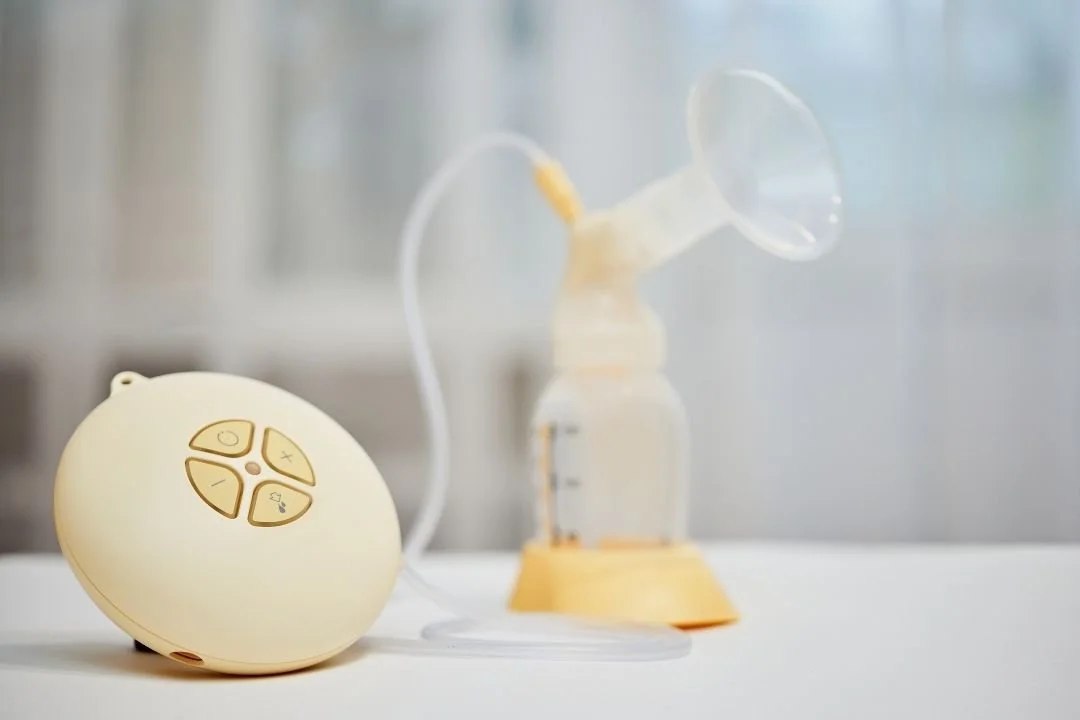
Use Stimulation Mode on your pump
All breast pumps include a stimulation (fast) mode designed to mimic a baby’s early fast sucking pattern. When a baby goes to the breast, their tongue moves really quickly to make you have a let down. When we’re pumping we want to replicate this my using our fast mode at the start of session until we have milk, and multiple times to stimulate additional letdowns.
How to use it effectively:
Start your pumping session in stimulation mode
Once milk begins to flow, switch to expression mode
If your pump switches too quickly, return to stimulation mode until letdown occurs
Once you see milk flow slow on expression mode or it feels like youre not getting anything anymore, try going back to stimulation mode again to trigger another letdown.
Many parents need extra time in stimulation mode immediately postpartum, especially if their flange doesn’t fit.

What to Do If Your Baby Won’t Latch and Milk Still Isn’t Flowing
Sometimes babies become frustrated at the breast because milk is not immediately available. This frustration can then make it even harder to trigger letdown. So if you’ve tried all of these techniques and still dont see milk, it’s okay. Get a 1-3 ml syringe full of milk and have someone help you release single drops of milk to reward baby and encourage them to suck long enough that they stimulate your let down.
This is one tip you WANT to know how to do in the first couple days postpartum & how to do it.
Position your baby at the breast
Have a partner use a small oral syringe filled with expressed breast milk and place one drop at a time at the corner of baby’s mouth where it meets the breast
Wait for baby to suck and swallow each drop before offering the next
This creates an immediate reward while baby is at the breast. Over time, baby begins to learn: Sucking at the breast leads to milk flow.

What If my Let Down is Too Fast?
Sometimes a letdown can be too fast. While often in the setting of an oversupply, this is not always the case. If you are within the first 6 weeks postpartum, we want to allow your body to adjust naturally based on natural supply and demand i.e. how much milk baby is leaving behind.
However, if you’ve reached the 2 month mark and you are struggling with recurring plugs, your baby is coughing and sputtering at the breast, baby is gaining weight more than well, maybe they’re struggling with signs of reflux or you’ve been told to cut dairy and your breasts never seem to empty, then this may be an oversupply that you want to start actively decreasing.
This first step in managing an overactive letdown is always positioning. Try leaning back as far as you can to latch, or positioning baby upright to feed (like a koala hold). If that doesn’t do the trick, you can hand express a little bit to take the edge off, but do this cautiously as we don’t want to encourage your body to make more milk by pumping an an ounce with each feed.
Lastly, if you’re still unable to manage the letdown and you’ve been diagnosed as having an oversupply, we can start exploring something called block feeding. There are also various herbs like parsley, sage, and peppermint that can be used to decrease supply. Now I won’t go into specifics on how to do that here, because I want you working with your IBCLC before you potentially tank your supply, but I want you to know that you do have options when it comes to managing your letdown and your supply.

Sudden Negative Emotions During Milk Letdown
Some parents may experience a sudden wave of strong emotions when their milk lets down. This can include feelings of dread, anxiety, or even intense sadness. Not knowing what is happening and feeling what can seem like extreme emotional distress multiple times throughout a feed or pumping session can be enough to make some breastfeeding journeys feel overwhelming or even unsustainable.
If this sounds familiar, I want you to know that there is help available to you.
This experience is known as Dysphoric Milk Ejection Reflex (D-MER). D-MER is a physiological response that occurs right before or during milk letdown, where a sudden wave of negative emotion—such as sadness, anxiety, dread, or irritability — appears briefly and then passes once milk is flowing.
It is important to understand that D-MER is not a psychological reaction to breastfeeding, and it is not the same as postpartum depression or anxiety in the typical sense. Instead, it is a neurochemical response tied directly to the milk ejection reflex itself.
When your body releases milk, the hormone oxytocin rises to trigger the milk ejection reflex. At the same time, there is a natural shift in dopamine, a neurotransmitter involved in mood regulation and emotional stability. In individuals who experience D-MER, this dopamine shift is felt more intensely. This creates a sudden emotional “dip” that can feel overwhelming, confusing, or distressing in the moment, even though it is temporary and resolves once milk begins to flow.
Support for parents experiencing D-MER can include:
Naming what is happening so it feels less confusing and isolating
Using grounding or distraction techniques during letdown
Prioritizing rest, nutrition, and emotional support where possible
Working with an IBCLC or healthcare provider if symptoms are affecting feeding, mental health, or daily functioning
For many parents, simply understanding that there is a name for this experience—and that it is physiological rather than emotional—can make it feel more manageable.
If you or you know is struggling with D-MER, please read more about it https://d-mer.org
Milk flow is not just a mechanical process. It is a complex interaction between your hormones, your nervous system, your baby, and your breasts. When milk is not flowing easily, the answer is never to ring them out like a rag. Instead, we want to support you with relaxation strategies that improve oxytocin release, and provide drops with a syringe to baby until you can be those drops.
With the right strategies, and IBCLC, parents are able to support their baby coming to the breast with less crying (from both parties).